How Versine works
Versine is built on one idea: math is a skill, like playing an instrument, and skills are built by practice. This page explains how that practice works, and the part you play in it.
Practice, like an instrument
Nobody learns the piano by watching someone else play it. They learn by playing, every day, for a long time: scales until they’re automatic, then pieces built from them. Math is the same. A student who has to stop and work out 7 × 8, or how to clear a fraction, has nothing left over for the new idea in front of them. A student who knows those things without thinking does.
So Versine doesn’t try to make math easy, and it won’t promise quick results. It does three things, over and over:
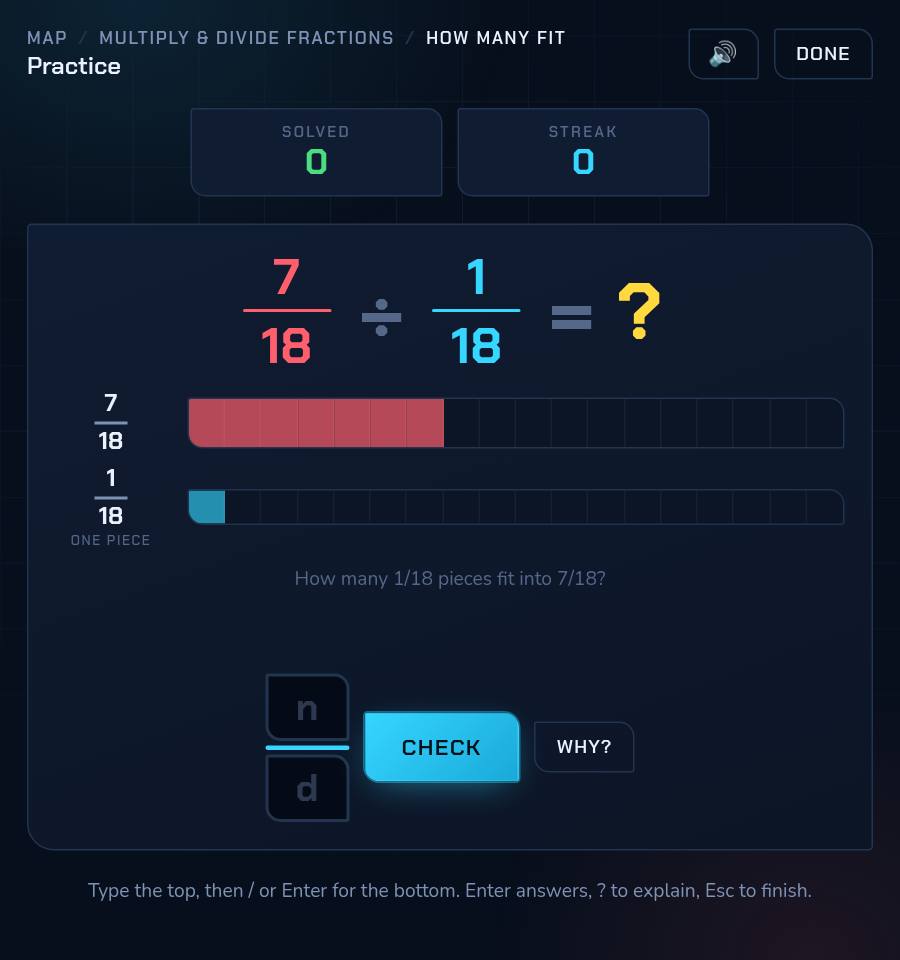
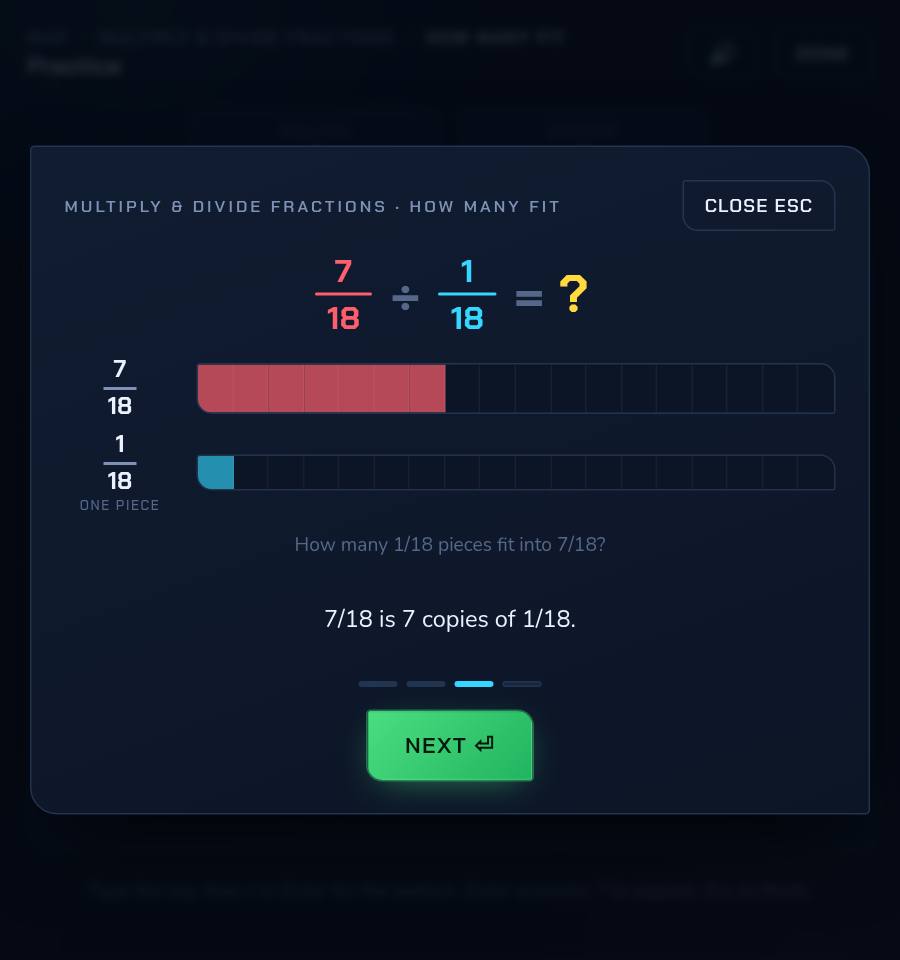
- It teaches one idea at a time, with a worked example the student can step through whenever they ask why.
- It gives them a great deal of practice on that idea, until it’s quick and sure.
- It brings the idea back later, so it stays learned instead of fading after the test.
The path
Versine has 88 skills so far, from integer arithmetic through the algebra, geometry, probability, statistics and trigonometry that come before calculus: functions, logarithms, vectors, complex numbers, polar curves and series among them. A student who is solid across all of it is ready to begin calculus.
The skills are laid out on a map. Each one opens once the skills it builds on are finished, so a student never meets an idea before they have what it needs.
A level: learn it, then prove it
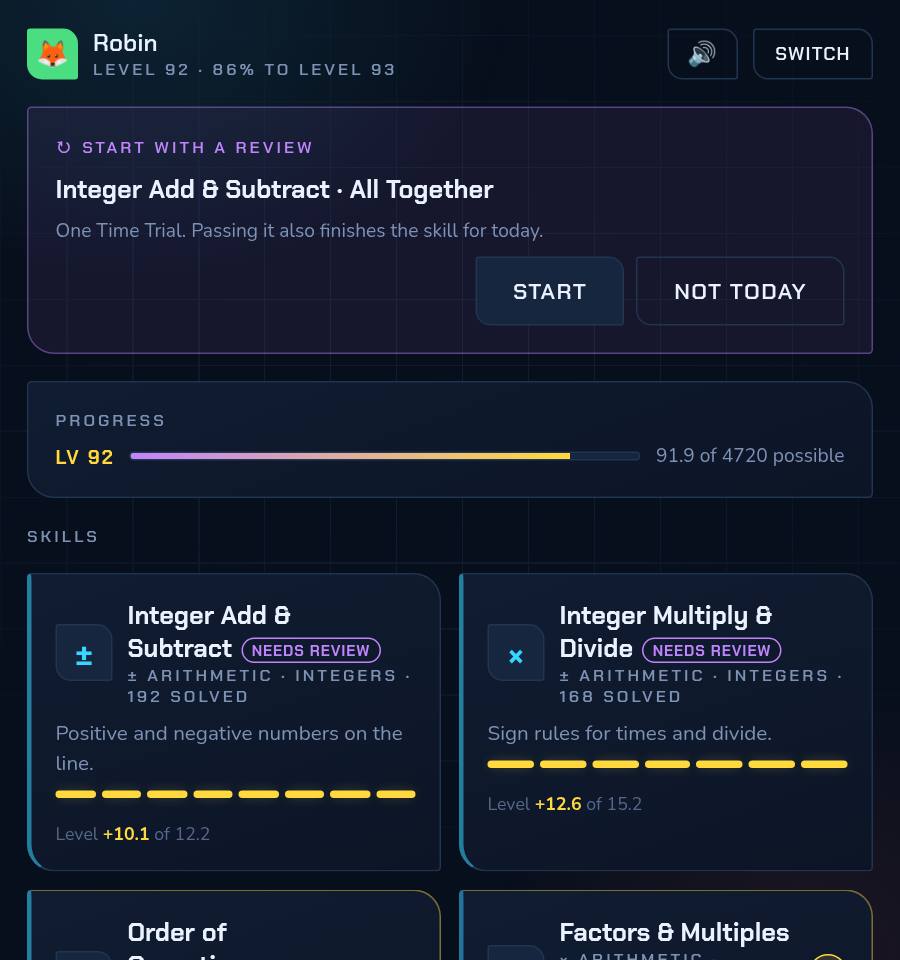
Every skill is a short ladder of levels, 665 in all, and each level teaches one idea. A level has two modes, on purpose:
- Practice has no clock and no limit. The student can ask why on any problem and step through a worked example. A problem they get wrong comes back a few problems later, so a mistake gets fixed instead of forgotten.
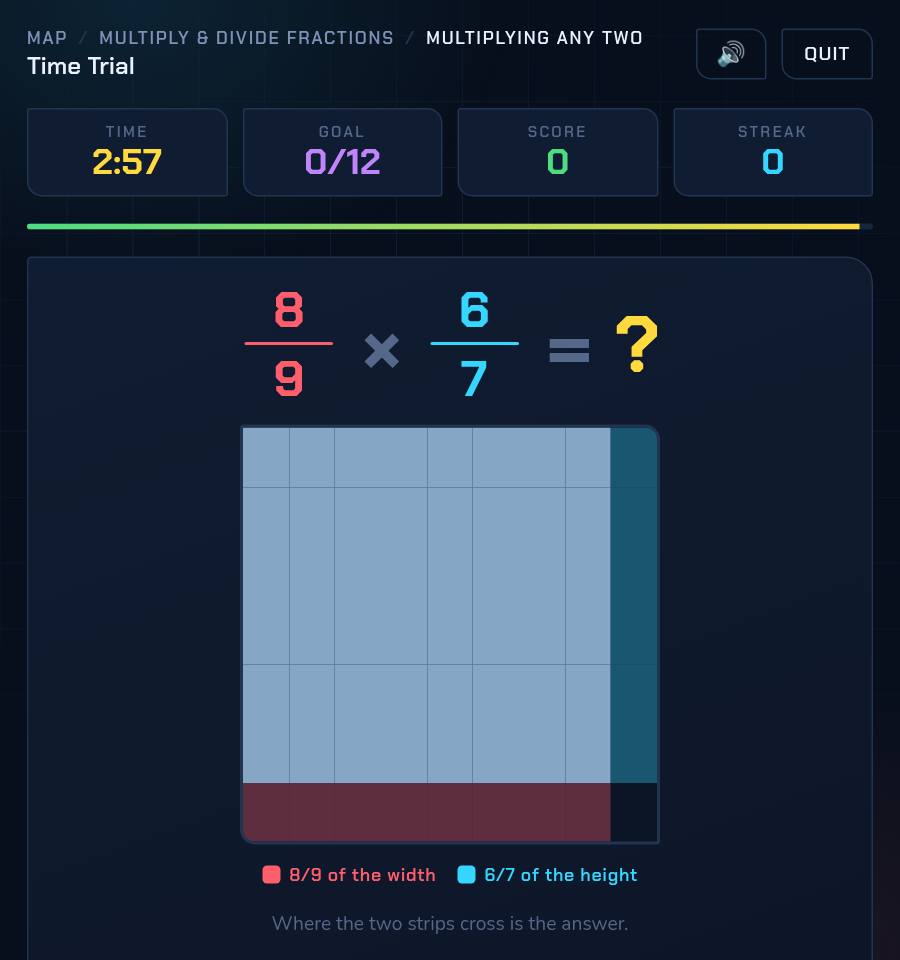
- Time Trial is a few minutes on the clock to solve enough problems, timed from the student’s own pace in Practice. Mistakes cost time, not lives. Passing it opens the next level, and the last level of a skill mixes everything before it.
The rhythm is simple: practice until it feels easy, then prove it. A student who keeps failing a Time Trial isn’t stuck; they need more Practice first.
Keeping what was learned
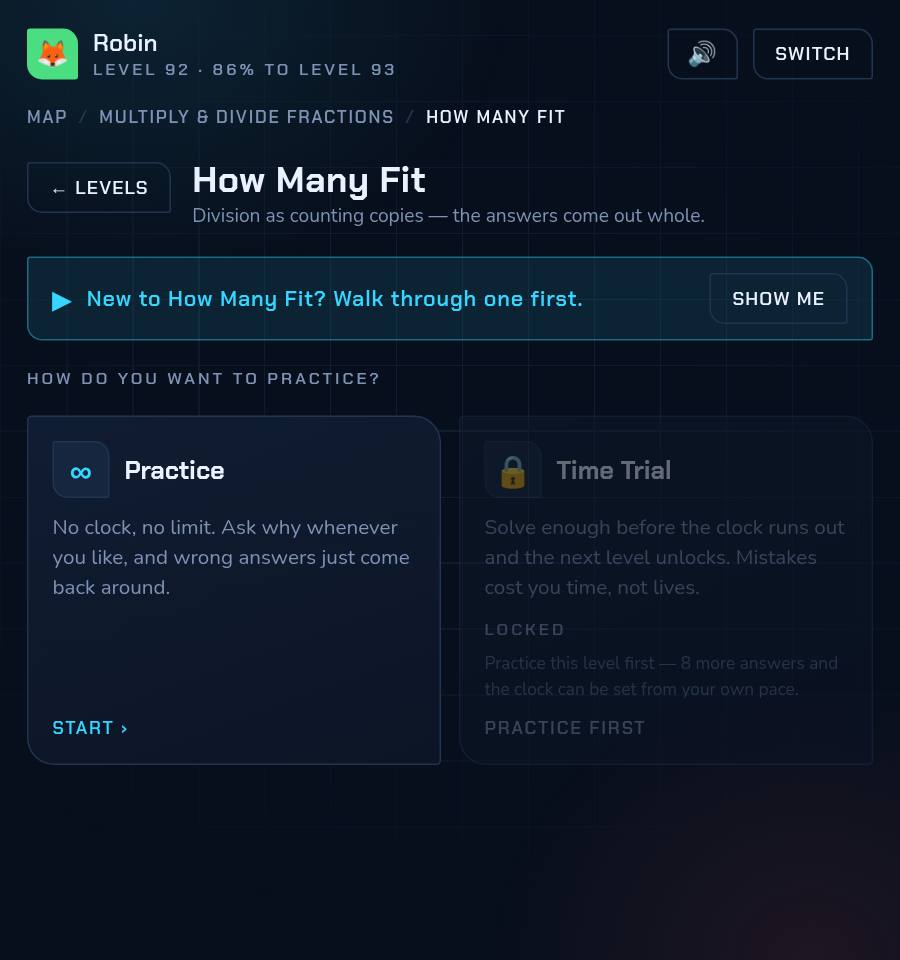
A finished skill doesn’t stay finished on its own. Versine brings it back for review after 7 days, then 14, 30, 60 and 120, each time the student passes it again. A review that’s due is offered when a session starts, and one that’s failed stays due until it’s passed. Work in a later skill that builds on an earlier one counts toward keeping the earlier one fresh.
The library
- 88 skills
- 665 levels
- 540,000+ problems
Practice only works if there’s always more of it, so every level draws on a library of problems written out in advance, more than 540,000 in all. A student can practice every day for years and keep meeting new problems instead of memorizing a few answers.
Writing problems out ahead of time also means every one can be checked before a student sees it. A second program, written separately and in a different language, solves each problem again from scratch in exact arithmetic and confirms the answer, all of them, every time the library changes. When a problem turns out to be wrong, it’s corrected by hand in the library itself.
Your part: 30 minutes, every weekday
Each student practices for at least 30 minutes every weekday. Versine is built for that much practice, and it works when it gets it. With much less, new skills come slowly and reviews pile up.
This is the part Versine can’t do for you. You don’t need to know the math, but you do need to make the time non-negotiable. What works for most families:
- Make it a requirement, not a suggestion, the way practicing an instrument is: Versine first, then screens and games.
- Same time, same place, every weekday. Right after school, or right after breakfast for homeschoolers. A habit doesn’t need willpower.
- Start each session with any review that’s due, then carry on with the current level. Versine offers the review first on its own.
- Let them be stuck for a while. Point them to the “why?” button and back to Practice rather than giving the answer. Working it out is the practice.
- Look at the Family page once a week. It shows when each student last practiced, and the parent area shows what they’ve finished. If a student goes 14 days without practicing, we email you, unless you turn that reminder off.
- Praise the showing up, not the score. Thirty minutes a day, every day, is what builds the skill.
Weekends are for rest, or extra practice if a student wants it.
Ready to start?
The trial is 14 days, which is enough to see whether the 30 minutes fits your family’s week.